
To use a bong, cover the bottom of the downstem with water, pack the bowl loosely, light one corner while you draw slowly, then pull the bowl out and inhale to clear the chamber. The water cools the smoke. It doesn't make it clean.
A bong delivers a lot of smoke at once, which is why it hits harder than a joint. First time, pack a small bowl, don't fill the whole chamber, and clear it. Then wait 15 to 30 minutes before deciding on more. Start low, go slow.
Contents9
What is a bong? The parts
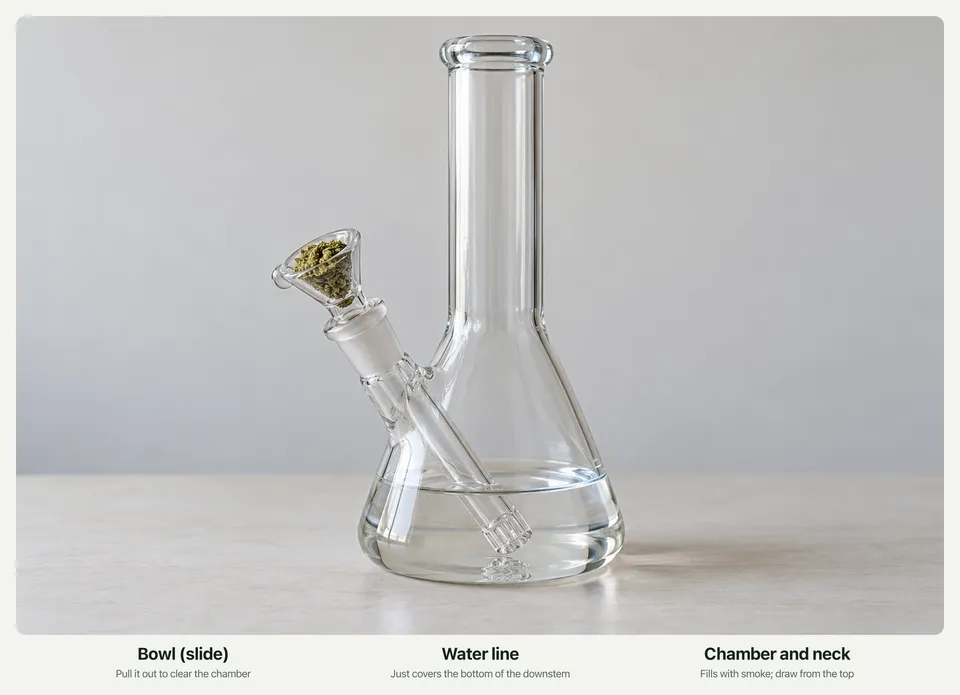
A bong is a water pipe. The smoke from burning flower bubbles through water before you breathe it in. Before you learn how to smoke a bong, it helps to know the parts.
- Bowl: the removable cup the flower goes in. Also called the slide, because you slide it out to clear.
- Downstem: the tube that carries the smoke from the bowl down into the water.
- Chamber (base): holds the water and fills with smoke.
- Neck and mouthpiece: the tall tube you draw from.
- Carb: on some bongs, a side hole you cover while lighting and release to clear. Most glass bongs have a removable bowl instead of a carb.
- Percolator, ice catcher: extras. A percolator breaks the smoke into smaller bubbles for more cooling; an ice catcher holds ice in the neck. Neither is needed.
Step 1: how much water
Pour water in through the mouthpiece until the bottom of the downstem is under water. If it has slits, cover them by about an inch (2 to 3 cm). That's it. More water means more pull and water in your mouth; less means the smoke skips the water and comes through hot. Cold water is fine. Start with fresh water every session.
Step 2: pack the bowl
Grind the flower medium, drop a slightly bigger piece in the bottom of the bowl so nothing falls through, and fill it loosely. Press the top just enough that it holds. The bowl guide goes into the detail; the rule is snug, not smashed, because a bong already has a lot of pull resistance.
Step 3: how to hit a bong
- Hold it steady. One hand on the base, one near the bowl. Sit down the first time.
- Seal your lips just inside the rim of the mouthpiece, not around the outside of the tube.
- Light one corner of the bowl while you draw slowly and steadily. You'll see the chamber start to fill with smoke and the water bubble.
- Stop before the chamber is full the first few times. Even a partly filled chamber is a big hit for a beginner.
- Pull the bowl out (or uncover the carb) and keep drawing until the chamber is clear.
- Breathe out normally. Don't hold it; see below. Put the bowl back and set the bong down somewhere it can't tip.
A bong hit is a big hit
You take in a whole chamber of smoke in one breath. That's a lot of smoke at once, and effects can start within seconds to minutes. New users often cough hard and feel it fast. Pack a small bowl, don't fill the chamber, and wait 15 to 30 minutes before the next hit. Start low, go slow. If you overdo it, the too high page tells you what to do. If you're brand new, read the first-time guide first.
Is a bong healthier than a joint?
No. The water cools the smoke, which is why it feels smoother, and it catches some ash and a little of the particulate matter. It doesn't make the smoke safe. The CDC says smoked cannabis harms lung tissue regardless of how it's smoked, and lists bongs among the ways people smoke. Canada's Lower-Risk Cannabis Use Guidelines say water pipes may cut some burnt particles while increasing the tar you take in.
One small lab test in the 1990s, paid for by two cannabis-reform groups and reported in their newsletter, compared joints, water pipes and vaporizers. The water took out more of the THC and related compounds than the tar. So for the same amount of those compounds, the bong delivered about 30% more tar than an unfiltered joint. The test did not measure the gases in the smoke. Smoother is not the same as safer. Vaporizers and edibles are the no-smoke options.
Bong water and germs
Stale bong water grows things. A 2017 case report describes a 23-year-old who had used a bong daily for four years and got a severe lung infection from Pseudomonas bacteria. The same kind of bacteria grew from his lung samples and from the bong. That's one case, and an extreme one. But the lesson is cheap. Change the water every session, clean the bong regularly, and don't share a mouthpiece when anyone is sick. Public-health guidelines note that infections such as tuberculosis have spread among water-pipe users. The cleaning guide has the method.
Common mistakes
- Too much water. If it splashes into your mouth, pour some out. The downstem needs an inch, not a chamber full.
- Pulling too hard. A slow, steady draw fills the chamber fine. Yanking it burns the bowl in one go and makes you cough.
- Holding the smoke in. Studies disagree about whether holding it in makes the high stronger, and one found no consistent effect. That study did find a longer hold made people absorb more carbon monoxide from the smoke. Public-health guidelines say breath-holding increases the toxic material you take in. Breathe out.
- Filling the whole chamber on day one. Stop well short of full. You can always take another later.
- Leaving the water in. That's how the film and the smell start.
- Lighting with the bowl loose. Seat the bowl in the downstem before you light, or the smoke leaks.
Words you'll hear
- Slide: the removable bowl.
- Milk, milky: a chamber full of thick white smoke.
- Clear it: pull the bowl and inhale the smoke out of the chamber.
- Rip: a big bong hit.
- Perc: percolator.
- Bubbler: a small hand pipe with a little water chamber, halfway between a pipe and a bong.
Common questions
Is a bong healthier than a joint?
No. Water cools the smoke and catches some ash, but the CDC says smoked cannabis harms lungs however it's smoked. In one small 1990s lab test, a bong delivered more tar for the same amount of THC and related compounds than an unfiltered joint. Smoother, not safer.
How does a bong get you more high?
It doesn't change the flower; it changes the dose per breath. One cleared chamber is a lot of smoke at once, and the cooled smoke is easier to take in deeply. That's why bongs feel stronger. Beginners do best with a small bowl, a chamber that isn't full, and a wait before the next hit.
How much water goes in a bong?
Enough to cover the bottom of the downstem by about an inch. If water reaches your mouth, there's too much; if the smoke comes through hot and dry, there's too little.
Should you hold in a bong hit?
No. The research on whether holding makes the high stronger is mixed, and public-health guidelines say breath-holding increases the toxic material that reaches your lungs. Breathe out normally.
What is the carb on a bong?
A small side hole on some bongs. Cover it while you light and fill the chamber, then uncover it to let air rush in and clear the smoke. Bongs without a carb use the removable bowl the same way.
How often should you change bong water?
Every session, and never leave it sitting overnight. Stale water grows bacteria and film; one published case report linked a serious lung infection to the same kind of bacteria found in a daily user's bong.
Why do I cough so much from a bong?
A bong hit is a lot of smoke in one breath, and beginners often pull too hard. Use fresh water, draw slowly, clear a smaller chamber, and don't hold it in. If the coughing is constant, that's your lungs objecting to smoke; vaporizers and edibles avoid it.
What is a bong?
A bong is a water pipe. You light flower in a small bowl, and the smoke bubbles through water into a chamber before you breathe it in. The water cools the smoke but doesn't make it safe.
We cite government health agencies and peer-reviewed research. Numbers in the text link to the source.
- Government CDC: Cannabis and lung health
- Peer-reviewed Fischer et al. (2017): Lower-Risk Cannabis Use Guidelines, American Journal of Public Health (water pipes, breath-holding)
- Gieringer, MAPS and California NORML (1996): Marijuana water pipe and vaporizer study
- Peer-reviewed Respirology Case Reports (2017): Marijuana bong Pseudomonas lung infection
- Peer-reviewed Zacny and Chait (1991): Response to marijuana as a function of potency and breathhold duration
- Government Health Canada: Health effects of cannabis